
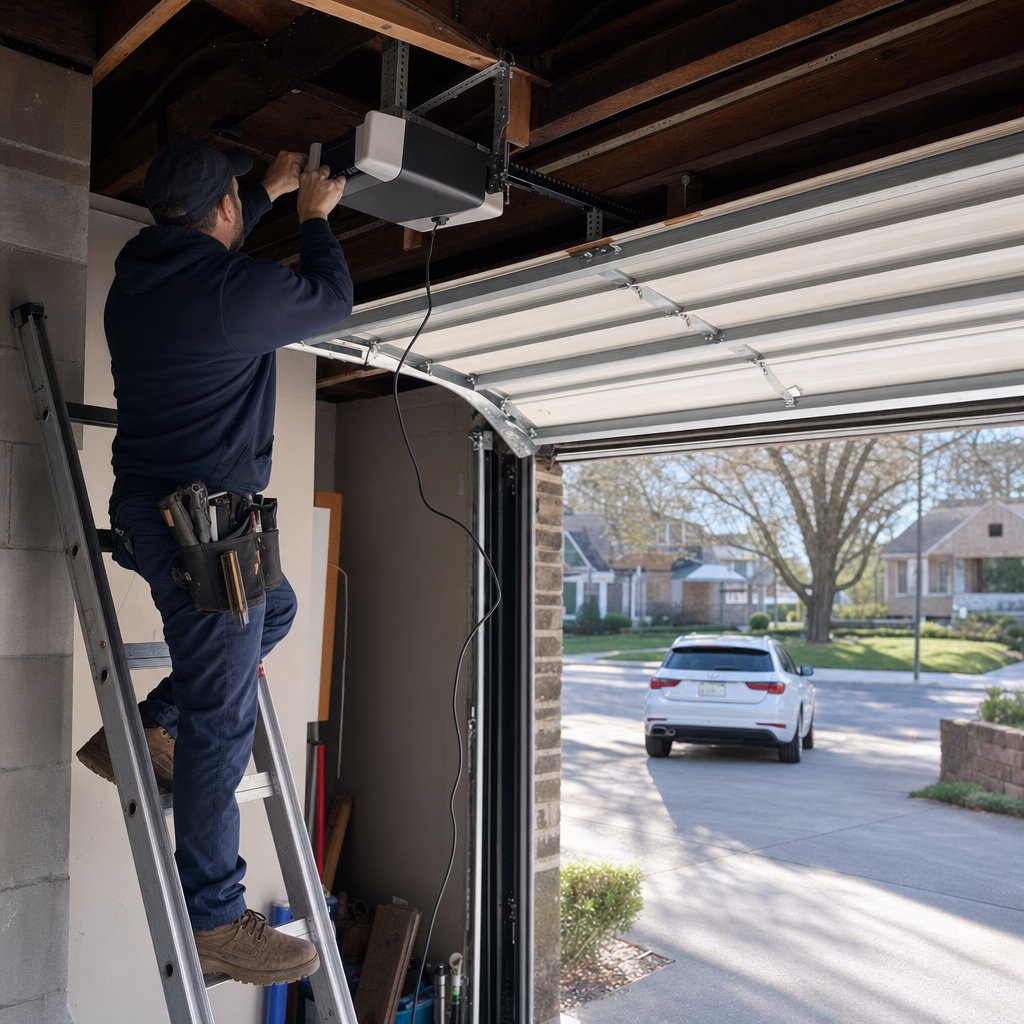
LiftMaster Roller Replacement: The Philadelphia Owner’s Guide
LiftMaster roller replacement in Philadelphia typically runs $110-$220 installed, and we stock the common sizes on every truck. Most jobs finish in under an hour. If your door is shaking, squealing, or catching halfway up, worn rollers are often the cause.
We see this most often in older homes in Roxborough and Mount Airy, where original nylon rollers have flattened or seized after fifteen or twenty years of daily cycles. The door still moves, but the opener strains, the track wears, and eventually something gives. Catching it early saves the track and the opener both.
Which LiftMaster Models This Applies To
LiftMaster uses standard 2-inch or 3-inch roller stems across most of their residential opener line, including the Contractor, Elite, Premium, and wall-mount jackshaft series. The roller itself is a door component, not an opener part, but LiftMaster-branded doors and many doors paired with LiftMaster openers ship with OEM rollers that carry the part number on the roller housing or the stem collar.
To identify yours: pull the release cord to disconnect the opener, then manually raise the door to mid-height. The roller stem slides into the hinge bracket; the wheel rides inside the track. Measure stem length (2″ or 3″) and note whether the wheel is steel, nylon, or sealed-bearing nylon. LiftMaster OEM rollers are marked with a four-digit part prefix; compatible aftermarket rollers from DURA-LIFT or National match the spec without the markup.
One compatibility gotcha: some LiftMaster wall-mount jackshaft installations use low-headroom track geometry that requires a short-stem 2-inch roller. A standard 3-inch stem will bind. We carry both on the truck.
Signs Your LiftMaster Roller Replacement Is Failing
- The door shakes or shudders as it moves. A worn roller wheel develops flat spots or loses its bearing. The wheel no longer rolls; it drags and bounces inside the track. We see this first on the bottom rollers, which carry the most weight.
- You hear a rhythmic squeal or grinding sound. Nylon rollers are meant to run quiet. When the bearing dries out or the nylon cracks, metal-on-metal contact starts. In Philadelphia’s humid summers and freeze-thaw winters, moisture accelerates this.
- The door catches or hesitates at the same height every time. A seized roller acts like a brake. The opener strains, the rail flexes, and the safety sensors may trigger a reverse. The roller is not rolling; it is dragging.
- The door sits crooked in the opening. When one roller fails, that corner of the door drops or binds. The gap between door and jamb becomes uneven. Left alone, this warps the door sections and wears the track.
- The opener works harder than it used to. A failing roller increases friction across the entire system. The motor draws more amps, the belt or chain wears faster, and the logic board can overheat. The roller problem becomes an opener problem.
Replacement Cost & What’s Included
| Service | Price Range (Philadelphia) |
|---|---|
| Roller Replacement (per roller, installed) | $110-$220 |
| Full Set Replacement (10-12 rollers) | $180-$380 |
| Track Inspection & Adjustment | Included with roller job |
The $110-$220 range covers a standard call: diagnosis, the roller itself, labor, and disposal of the old part. Nylon with sealed bearings runs toward the higher end; basic steel toward the lower. If the track is bent or the hinges are worn, we will show you before any additional work. The price is stated flat, before the wrench comes out. No surprises on the bill.
Every roller replacement carries our 90-Day Done Right Promise: if it is not right, we come back. In writing, no argument.
DIY or Call Us?
A homeowner can safely inspect rollers from the inside of the garage with the door down and the opener unplugged. Look for cracks, flat spots, or rust on the wheel. Wiggle the roller in its bracket; excess play means the bearing is gone.
Replacing the roller itself is where DIY goes wrong. The door must be raised to unload the roller from the track, which places spring tension on the system. Bottom rollers sit in brackets under constant load. A slipped wrench or a door drop can cause serious injury. We do not recommend it.
We carry 2-inch and 3-inch stems, nylon and sealed-bearing sets, for LiftMaster and all major brands including Chamberlain and Genie. Most roller jobs in Philadelphia finish in one visit. Call (844) 623-3171 and tell us what the door is doing. We will tell you what it needs.
FAQs
Standard nylon rollers last 10-15 years with typical use; sealed-bearing nylon can reach 15-20. Philadelphia’s freeze-thaw cycles and road salt tracked into garages accelerate wear. Steel rollers rust; basic nylon dries out. We inspect rollers on every tune-up and replace them before they seize. Call (844) 623-3171 for a free check.
No. Once the bearing is shot or the wheel is cracked, the roller is done. There is no reliable rebuild. Replacement is the only fix that lasts. We stock the right size on the truck and install it the same day. Call (844) 623-3171 for pricing.
A single roller takes 20-30 minutes. A full set, 45-60 minutes. We arrive with the parts, so there is no waiting on delivery. Most Philadelphia appointments are completed in one visit. Call (844) 623-3171 to schedule.
We stock compatible rollers that match LiftMaster specs exactly, OEM and quality aftermarket both. Mainspring Garage Door Co. of Philadelphia is an independent service provider, not affiliated with LiftMaster, but we are factory-familiar with their line. We carry 2-inch and 3-inch stems, short-stem low-headroom variants, and sealed-bearing nylon on every truck. Call (844) 623-3171 to confirm fit for your model.
Written by Ted Kaminski, Owner, Mainspring Garage Door Co. of Philadelphia at Mainspring Garage Door Co. of Philadelphia, serving Philadelphia and nearby areas.